Solar Energy

Frequently Asked Questions about Community Solar

Everything you need to know about saving money with community solar

Common Questions About Community Solar

Have questions about community solar? You're not alone! Here are answers to the most common questions we receive. Click on any question to see the answer.

General Questions About Community Solar

1) What is Community Solar?
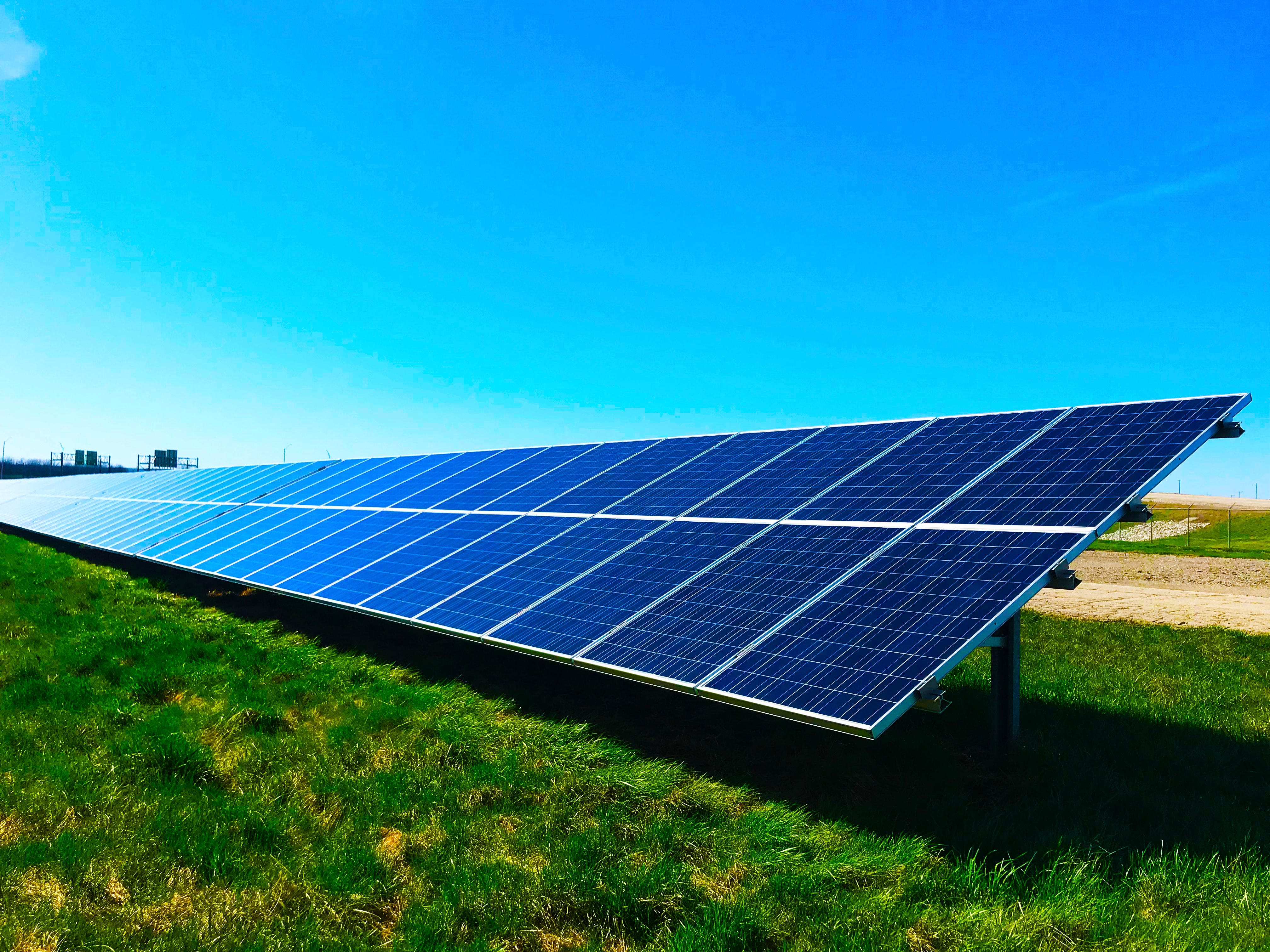
Community Solar programs are generally regulated by state laws that allow residential and commercial electricity customers to buy electricity – usually at a discount – from Community Solar Gardens (CSG's) – sometimes called Solar Farms. These are medium to large arrays of solar panels that deliver clean, local energy and allow subscribers to receive their electricity as they always have: straight from the grid. Community Solar subscribers - including renters and business tenants - can subscribe to a portion of the energy generated by the CSG/solar farm without any upfront fees, or having to install any solar panels on their roof or property, avoiding the often months-long process of permitting, construction, and inspections that can easily cost tens or hundreds of thousands of dollars. Community solar subscribers then receive credits on their utility bill for the energy produced by their allocation of the CSG/solar farm, and they pay for those credits at a discount - saving money each month by purchasing their electricity directly from the CSG/solar farm owner. Subscribing to Community solar - residential or commercial – makes financial sense since every subscriber saves money on electricity, and benefits the environment and their local economy.
2) How Does Community Solar Work?
Individuals and businesses work together through a state's Community Solar program to enroll in subscriptions to use the energy that a Community Solar Garden (CSG)/solar farm produces. Each subscriber subscribes to a portion of the energy produced based on their previous annual power usage, which is why we take a look at your power bill – to ensure your allocation from the solar farm will meet or exceed your current and future electricity needs. Community Solar farms are usually built and maintained by private investors and companies – and often cannot be the same as your grid utility, based on your state's laws – and they work with your grid utility company and residential and commercial subscribers to offer these programs.

The solar farm is connected to the utility's electrical grid, and subscribers receive credits on their grid electricity bills for the amount of their allocation of the power produced that they have subscribed to. Community Solar requires no installation of solar panels on the subscriber's property or any maintenance, which makes it a simple and accessible option for all electricity consumers who cannot or prefer not to install solar panels on their own roofs.
3) Why Would I Want to Use Community Solar?
Community solar subscriptions benefit both residential and business power consumers, including:

Cost Savings: You are guaranteed to save money on your electricity costs! Your electric grid utility will apply credits based on the power produced by your subscribed allocation directly to your electricity bill, and you pay for those credits directly to your CSG/solar farm operator at a discounted rate compared to what you pay your electric utility.

No Upfront Investment: Residential electric customers can subscribe to Community Solar for Free. There are no costs involved to enroll and nothing to buy or install, making it a hassle-free way to access solar power. Some commercial subscribers may incur small enrollment fees, depending on your state and usage levels.

Support Clean Energy: Community Solar subscribers support the generation of clean, local, renewable energy, fostering a healthier environment.

Support Your Local Economy: Community Solar subscribers support their local economy and help to provide good-paying, high-tech electrical and construction jobs in their area.
4) Is there a Community Solar Garden/Solar Farm Near Me?
Yes, Community Solar subscriptions are currently offered in 26 states & territories including: Arizona, California, Colorado, Connecticut, Delaware, District of Columbia, Hawaii, Illinois, Louisiana, Maine, Maryland, Massachusetts, Minnesota, Nevada, New Hampshire, New Jersey, New Mexico, New York, North Carolina, Oregon, Puerto Rico, Rhode Island, South Carolina, Vermont, Virginia, and Washington.

More states are contemplating passing Community Solar legislation so this list will likely grow to encompass the entire United States of America at some point in the future.
5) Am I Eligible to Subscribe to Community Solar?
Most electric consumers including homeowners, renters, and businesses, can sign up for community solar, regardless of whether they have the ability to install solar panels on their roof or property. Anyone who does not have solar installed on their property or already participate in another community solar farm can subscribe.

If you receive an electric bill: you can likely subscribe. If you're unsure: fill out the form to see if you qualify, and we'll be in touch if you don't or to finalize your enrollment, or send us a note on our Contact form.

You can also visit your electric utility's Website about any community solar programs they may offer. If a program is available in your utility service area, you can start benefiting by consuming clean, local, renewable energy.

Keep in mind: Community Solar programs only have a limited capacity so only a limited number of subscriptions are available and space may be limited and enrollments are granted on a first-come, first-served basis so the sooner you sign up: the better for your pocketbook and the environment!
6) Can Renters or Tenants Subscribe to Community Solar?
Yes! Residential and commercial renters/tenants can subscribe to community solar. There is no equipment or solar panels that will be installed on your roof so roof direction/slope, shading, and other factors are not a part of the equation. You do not have to own the property to subscribe – you just need to be the one with your name on the electric bill.

And once you subscribe: you can probably take your subscription – and your discounted, clean, local electricity rate with you (if you remain connected to the same grid utility, in most cases).
7) If I subscribe to community solar, do I get the federal solar tax credit?
Community solar subscribers do not qualify for solar tax credits as those are for the investor/owner of the physical solar farm, but subscribers still benefit by receiving discounted, clean, local renewable energy and supporting the local economy!
8) When I subscribe to Community Solar, does the solar farm become my electric utility?
No, you continue being a customer of your grid electric utility (and if you are on a 3rd party supply: you continue to choose your electric provider). You remain tied to the grid and keep receiving your electricity from the grid and you must maintain that connection to qualify for community solar – and pay any balance due to your electric grid utility company.

Your community solar subscription supplements your grid utility's electric supply and your community solar allocation creates credits which are deducted from your grid utility's electric bill, reducing your overall electric costs. You pay for allocated solar power at a reduced rate.

Questions About Community Solar Billing

9) Do I need to provide payment information to subscribe to community solar?
Yes, most all community solar farm operators around the country require subscribers to enroll in auto-pay to cover their allocation of solar power produced by the community solar garden, which can be done with a credit or debit card, or a bank account at the time of enrollment.

SimpleSmartSolar.com does not collect any payment information online but once you qualify and have filled out the form, a SimpleSmartSolar.com Community Solar Enrollment Agent will give you a brief call to finalize your enrollment and ask for payment information which will be directly input with the community solar garden operator's system in order to secure your subscription.

You will not be billed anything up front on the payment method you provide. In most cases you won't be billed for 2 to 4 months from the time of your enrollment, and then it will be on an ongoing (monthly) basis just like your grid power bill.
10) How do the Community Solar Credits work on my regular electric bill?
Subscribers receive credits based upon the amount of the solar farm that has been allocated to them based upon their past electricity consumption. This amount is measured in Kilowatt Hours (kwh). The amount of kwh produced by your community solar allocation is then deducted from your grid utility electric bill, usually called a "Community Solar Rewards Credit" or similar, depending on your state's particular terminology, and which reduces your overall electricity costs. You pay for the credits produced by your subscribed community solar farm allocation at a discounted rate compared to what you pay your electric grid utility (per kwh).

Because we are talking about solar: you will likely see a higher amount of credits (kwh) produced in the summer and a lower amount produced in the winter, and it varies seasonally.

The amount of your community solar subscription allocation is based upon your historical electrical consumption – that's why you upload a copy of your electric bill on the SimpleSmartSolar.com online form when you enroll.

If you need to add more capacity to your subscription in the future: you can contact your community solar farm operator once you are enrolled.
11) Will I get a Second Electric Bill?
In most cases yes, though some states have fully integrated the two (called consolidated billing) and others are moving towards this for convenience and simplicity.

In areas where consolidated billing is not yet in place: you will receive two invoices: one invoice from your grid electric utility, and a second invoice from your community solar farm operator.

Your grid utility bill will show your community solar credits and that amount will be deducted from the amount owed to your grid utility company.

Your community solar farm operator's invoice will be for the discounted cost of the solar energy generated by your subscribed allocation of the community solar farm's production.

Credits from your community solar subscription may take 1 or 2 billing cycles to appear on your grid utility bill, but the good news is: the amount of credits on your grid utility bill will be more than the amount you pay for those credits, so your overall cost of electricity goes down!
12) Can you give me an example of how the billing works and how much I'll really save?
Here's an example if your grid electricity bill is regularly $100: When you subscribe to community solar, your bill could have $90 in credits, and your bill to your grid utility company would then become $10. If your community solar credits cost you $81 for the solar electricity produced by your subscription allocation: you save $9 or 10% for that month! If you save 10% every month, that's like getting 1.2 months of free electricity per year!

In some states, depending on circumstances like government assistance or income levels: community solar subscribers can save up to 55% which would be the equivalent of over 6 months of free electricity per year!
13) How do I pay my community solar bill?
You can pay your community solar bill with a credit or debit card or a bank account using ACH (just need your routing and account numbers). It's up to you.

Most community solar farm operators require subscribers to enroll in auto-pay with one of these methods above at the time of enrollment, and this payment method will be billed monthly once your enrollment has fully processed. This keeps your account up-to-date and allows your subscription to continue.

Residential customers pay no up-front fees, and only pay for the discounted electricity produced by your community solar subscription.
14) Am I eligible for consolidated billing?
It depends on your location and state. Most community solar programs are moving towards consolidated billing (the combining of your grid utility bill and your community solar farm bill), but it's not implemented everywhere just yet.
15) How do I save money with a Community Solar subscription?
Community solar subscribers receive an allocation of power produced by a local community solar farm, and the electricity that is produced is paid for by the subscriber at a lower rate (per kwh) than they pay to their grid electric utility, leading to overall electricity cost reduction.

Discounts vary by location, state laws, community solar farm operators, income levels, and whether a subscriber receives any government assistance (pursuant to their state's Community Solar laws). Community solar discounts can range from 5% up to 55% depending on these factors.
16) Why did my Community Solar Credits go up/down this month?
Because we are talking about solar power, the amount of solar power produced by your allocation of your local community solar farm's production will go up and down based on the time of year/seasonality. In the summer: solar produces more electricity in North America, and in the winter: it produces less. There may be other factors – like weather/cloud cover - but that's generally what subscribers can expect throughout the year.
17) I have a TON of Community Solar Credits on my bill – can I sell them for cash?
Your community solar credits are generally rolled over for future months and used when you have higher power bills throughout the year. In the summer, people often have higher power bills due to air conditioner usage, and also: solar produces more power as well, so it works well together. If your allocation of community solar seems out of balance – too high or too low: contact your community solar farm operator to revisit your allocation.

Different solar garden operators handle excess credits differently based on your subscription agreement and your state's laws – check your subscription agreement to see how it's handled in your area with your community solar garden operator once you are enrolled.
18) I seem to be missing community solar credits on my bill – why?
If your grid utility bill is missing community solar credits, it could be a processing delay or a potential discrepancy in solar production data provided by your grid electrical utility.

Most community solar garden operators will communicate with you if there is ever a planned outage or some kind of maintenance that may affect your credits – contact your solar farm operator with any questions.
19) If I set up auto-pay for my community solar bill, will I be charged immediately?
When you set up auto-pay, your next monthly community solar invoice will be billed to your provided payment method.

You are responsible to pay any invoice due in a timely manner to continue your community solar subscription.
20) My Community Solar Farm is local – are my payments sent to a local address?
Many large businesses use a central payment receiving facility, so it's possible that your payments will be sent to an address that is not local.

Many community solar farm operators build and manage multiple community solar gardens nationwide.
21) How much does Community Solar cost?
There are no costs involved for signing up a residential electrical consumer into a community solar program. Residential customers only pay for the electricity produced by their allocated subscription at a rate lower than they pay their utility, resulting in a lower overall cost of electricity for their residence.

Commercial community solar subscribers also see a lower overall cost of electricity, and depending on any number of factors, may incur a relatively small enrollment fee.
22) Where's my community solar bill / invoice?
Most community solar operators provide a number of ways to receive your bill including via email, via text/SMS messaging, or via USPS – just like any other power company.

You have a number of options when enrolling, and you can also log in to your community solar garden's online platform to see your usage, billing, and to change payment methods at your convenience – we set up your online account at the time of enrollment in your community solar subscription, and you can change your online login account password at a later date as you choose.
23) What happens if I don't pay my community solar invoice?
In your subscription agreement you agree to pay for the credits produced by your subscribed allocation of solar power, and failing to do this may lead to a suspension from the community solar program, or possibly losing your discounted community solar credits. Continued non-payment could lead to the cancellation of your subscription agreement and loss of access to discounted community solar electricity.
24) Why does my community solar bill show previous months of production?
Your community solar invoice may show production costs from a previous month or billing period due to information/reporting from your grid utility company being delayed after credits appear on your grid electric bill. Community solar operators strive for accurate billing without any missed information, and sometimes they must rely on reports from your grid utility company which may create delays in obtaining reliable data and reporting on electric usage.

Questions About Community Solar Subscription Accounts

25) Will I have an online account to log in to with a Community Solar Subscription?
Yes, every community solar garden operator we work with will set up a secure (password protected) online account for you to use that will allow you to manage things like invoices, billing, see the amount of electricity produced with your allocation, changing contact information, and possibly even managing a move if you remain with the same utility to maintain your community solar subscription.
26) How do I cancel my Community Solar Subscription?
Different community solar garden operators have different terms in their subscriber agreements and that's where the details of your subscription cancellation policies will be found. But generally: most subscription agreements can be canceled at any time, often with a 30 to 90 day notice, and many state laws do not allow cancellation fees (varies by state).

You may also be eligible to transfer your subscription to a new address if you are moving to hang on to your electricity discount, depending on where you move and what utility services your new address.

If your community solar garden operator does not service your new address: there may be others who do – contact SimpleSmartSolar.com to find out.
27) How long is the term of my community solar subscription agreement?
Most community solar subscription agreements are for 20 years, which is approximately the life of the panels in your community solar garden. You can capture the discount for up to 20 years – and possibly choose to extend your agreement if that is a future option, or you can cancel anytime with the proper notice if you choose to pay full price for grid power.

Questions About Signing Up for Community Solar

28) Will SimpleSmartSolar.com be who we buy electricity from?
No, SimpleSmartSolar.com is a community solar subscriber management and enrollment agency. Community solar farm owners and managers contract with us to enroll residential and commercial customers into subscription agreements to utilize the solar power produced by the community solar garden near you.

SimpleSmartSolar.com works with numerous community solar farm investors/operators/managers nationwide and once you fill out the form at SimpleSmartSolar.com you will get a call from a community solar enrollment agent that will let you know where your local solar garden is, and who manages it and assist you in enrolling to capture your electricity discount.
29) Can I sign up for community solar with my utility?
No, you must enroll with a community solar subscriber agency like SimpleSmartSolar.com. Many state laws prohibit large, publicly traded energy companies from owning community solar gardens and legally require only private, 3rd party companies/investors to own them (depending on the state), and these community solar farm operators and managers outsource subscriber acquisition to SimpleSmartSolar.com.

Enrolling residential and business electricity consumers into community solar programs is all SimpleSmartSolar.com does – it's our area of expertise.

In fact: we are quite busy and as such: we're hiring more community solar agents to assist us in enrolling more people around the country – if you're looking to help with this mission – get in touch!
30) I'm subscribed to community solar and just sold my building or home – what do I do?
If you sold the property that was named in your community subscriber agreement you can cancel your agreement, or if you'll be moving to an area served by the same utility you can usually transfer your subscription agreement to the new address.

If you're moving to an area served by a different grid electric utility you can likely enroll into community solar through another community solar farm if it's available in that area – contact SimpleSmartSolar.com and we can advise you if it's available at your new address.
31) What happens if I move?
If you move you can often transfer your community solar subscription and maintain your electricity discount with your current provider if served by the same grid utility.

If not, we can see if there's another community solar program available at your new address.

And you can cancel at any time with the proper notice to your community solar garden operator, which you can provide online.
32) How long does it take to cancel?
Community solar garden operators generally require a 1 to 3 month notice if you intend to cancel, during which time you will still get community solar credits (at a discount). Depending on the speed of your grid utility it may take 1 to 6 months to fully cancel your subscription agreement.
33) How do I know Community Solar isn't a scam?
We understand that the benefits and savings may sound "too good to be true" but Community Solar is real and enshrined in the laws of 24 states, Washington DC, and Puerto Rico – it's a growing trend as people like the idea of clean, local, solar power and supporting their local businesses and providing good jobs in their local economy.

There really are no fees/costs to enroll for residential customers (minimal fees for businesses, if any), and you really are guaranteed to save money on your overall electricity costs.

Significant investment has gone into planning, permitting, and building out these oftentimes very large – multi MegaWatt – community solar farms and the facilities to maintain and manage them like their online platforms to manage their subscribers which SimpleSmartSolar.com uses to enroll people.

Feel free to do your homework and see for yourself. SimpleSmartSolar.com has a page for every state we offer community solar in, and we generally link to that state's law on that Web page (right under the main image/headline) so you can read the law for yourself.

Community solar is legally mandated in many states, and most of the businesses SimpleSmartSolar.com enrolls subscribers for are multi-million (or multi-billion!) dollar enterprises.
34) How do I sign up for a Community Solar Subscription?
You can fill out the form if you qualify by clicking HERE and answer the 3 qualifying questions:

  • Are you up to date on your bill?
  • Do you have a PDF copy of your current electric bill downloaded from your utility?
  • Do you have a card or bank account to sign up for auto-pay?
If the answer is yes to all of these qualifying questions: you are eligible to subscribe and will be taken to the enrollment form where we will collect your contact information, email, you can set your password for your online account, we will ask some questions about your electric usage, in some locations we may ask about your income threshold or government benefit status if that may lead to a larger discount for you, and we will ask you to upload a PDF file of your electric bill (that you previously downloaded from your utility), and submit the form.

You will receive some automated email(s) and get a phone call from a community solar enrollment agent to finalize your enrollment with your payment information (nothing is charged during enrollment), and explain everything to you and answer your questions and walk you through getting to know your community solar farm operator and get you set up to log in to your new online account.

It takes a couple minutes to fill out the form online once you have a PDF copy of your power bill, and usually less than 5 minutes on the phone to finalize your enrollment – it's a very simple process.

Just visit SimpleSmartSolar.com to enroll today!
35) What if I was unable to complete my sign up process on the phone with you?
This rarely happens, but can occur if you have a past due balance on your electric bill – the bill you upload cannot have a past due balance – keep that in mind.

Once you catch up you can enroll – we will create an online account for you with your local community solar garden operator and you can complete your sign-up by logging in to your account and entering payment information.
36) When will my community solar subscription start producing energy credits for me?
You can monitor your enrollment process on your community solar farm operator's website in your online account to check for updates, but generally speaking – if your local farm isn't still under construction: you will most likely see credits appearing on your grid utility electric bill in 2 to 4 months.

If it's still under construction: you will receive updates as construction progresses towards completion and be kept in the loop. You will be notified once your community solar farm is energized and producing clean, renewable energy and putting it on the grid for you to use.